

PFBS
Non stick clothing and stain resistant fabrics, food packaging, AFFF(fire fighting foam), industrial processes
PFHxA
Stain resistant fabrics, paper food packaging, carpets; it is also used for manufacturing photographic film
HFPO-DA
Polymerization aid in the manufacturing of high performance flouropolymers following the phase out of PFOA
PFHpA
Stain and grease proof coatings on food packaging, couches, and carpets
PFOA
Non-stick and stain resistant consumer products, food packaging, fire fighting foam, and industrial processes
PFOS
Non stick cookware, grease resistant food packaging, and waterproof clothing, regular clothing like yoga pants
What Are Microplastics & Where Are They Found?
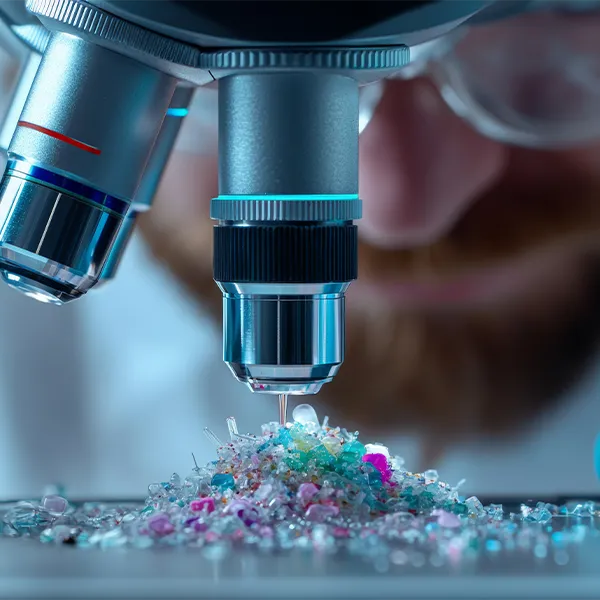
Microplastics are tiny plastic particles less than 5 millimeters in diameter that originate either as “primary” microplastics—manufactured pellets, microbeads in cosmetics, and synthetic textile fibers—or as “secondary” fragments created when larger plastic items weather and break apart. Because of their small size and buoyancy, they can travel long distances and are hard to capture once released into the environment.
In aquatic systems, microplastics are now ubiquitous: they float on the surfaces of oceans, lakes, and rivers, mingle in the water column, and accumulate in deep‑sea and estuarine sediments. Ocean currents disperse them across the globe, so they are found from crowded coastal zones to remote mid‑ocean gyres, Arctic ice, and even the Mariana Trench. Freshwater bodies, stormwater runoff pathways, and wastewater effluent streams all act as conduits that deliver these particles to marine environments.
On land, microplastics have been detected in agricultural soils (often introduced via sewage sludge used as fertilizer), roadside dust from tire and brake wear, and landfill leachate. Airborne fibers drift onto mountain snowfields and urban rooftops alike, while microplastics also show up in drinking water, bottled beverages, table salt, and many foods. Their pervasive presence across air, water, and soil illustrates how thoroughly plastics have infiltrated every corner of the planet.
Get Your Questions Answered Here!
What is PFAS
What is PFAS?
PFAS, or per- and polyfluoroalkyl substances, are a group of man-made chemicals known for their persistence in the environment and potential to cause harmful health effects.
What does PFAS do to the body?
PFAS can accumulate in the body over time and may interfere with hormone function, weaken the immune system, and increase the risk of certain cancers and other health issues.
What items contain PFAS?
PFAS can be found in everyday items like nonstick cookware, waterproof clothing, food packaging, stain-resistant fabrics, and some firefighting foams.
How do I avoid PFAS?
To avoid PFAS, choose products labeled PFAS-free, limit use of nonstick cookware and treated fabrics, and avoid fast food packaging and microwave popcorn bags that may contain these chemicals.